Let’s begin, not with vultures, but with starfish. Question: What do starfish and your liver have in common? Well, assuming you don’t have cirrhosis, they both have the ability to regenerate, i.e. grow functional tissue back after injury and loss. As far as the human liver is concerned, a lot of it. Up to two-thirds of the liver can regenerate with surgical resection of a liver tumour. Surgeons actually embolise the portal vein feeding a liver tumour prior to surgery so that the remaining good part of the liver has well and truly regenerated at the time of resection. It may not look the same once it has regenerated, but, when you consider the alternatives, who cares? And it tends to happen fairly quickly — within just a few weeks.
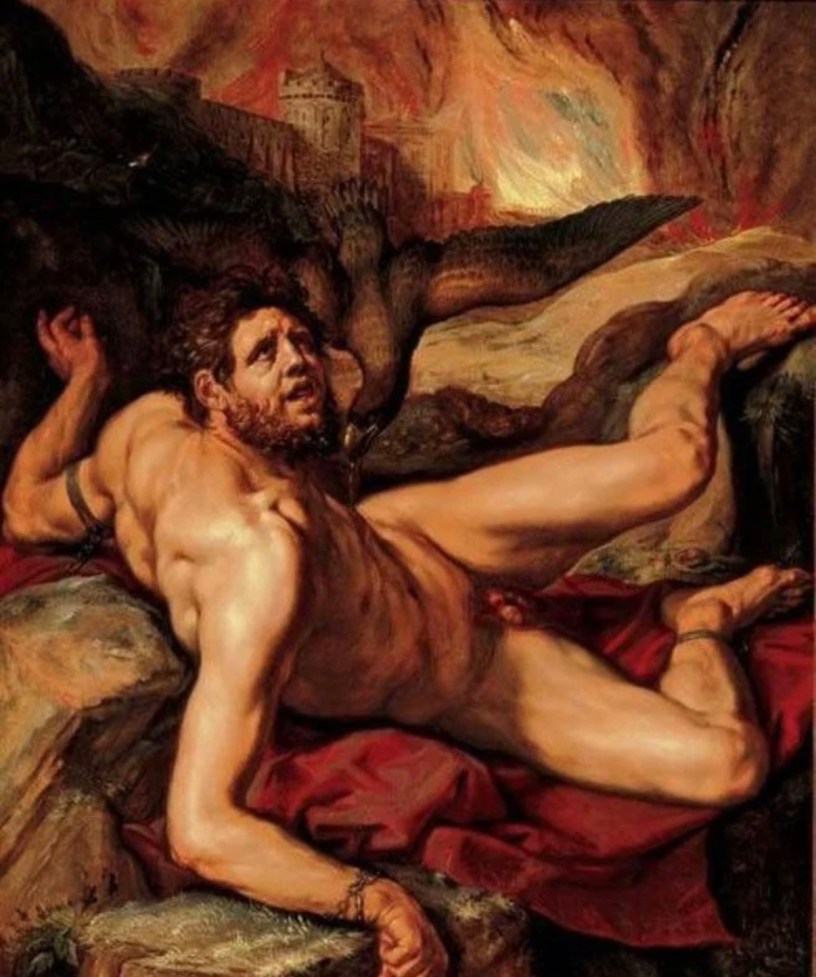
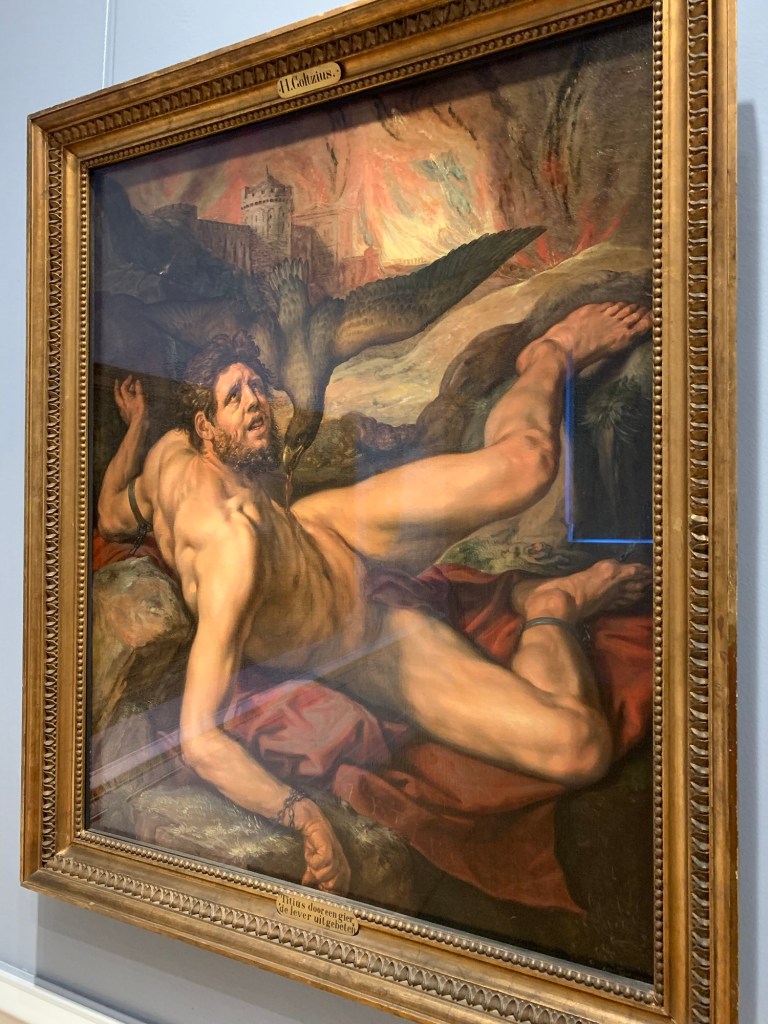
All very well, but what’s it got to do with today’s post about a Greek mythological figure? Well, firstly, a disclaimer: I get confused by the family trees of Greek mythology. I have only just managed to get my head around Odysseus, having recently sailed around Ithaca, read Stephen Fry’s book, and now seen the film. So Odysseus became a starting point. My new Greek bestie. On revisiting this painting of Tityus (or Tityos, Titius) by Hendrick Goltzius, I was hoping that there might be a genealogical link to Odysseus … and there sort of is, but only by virtue of the fact that most mythological figures trace back and forth to the deities in some way.
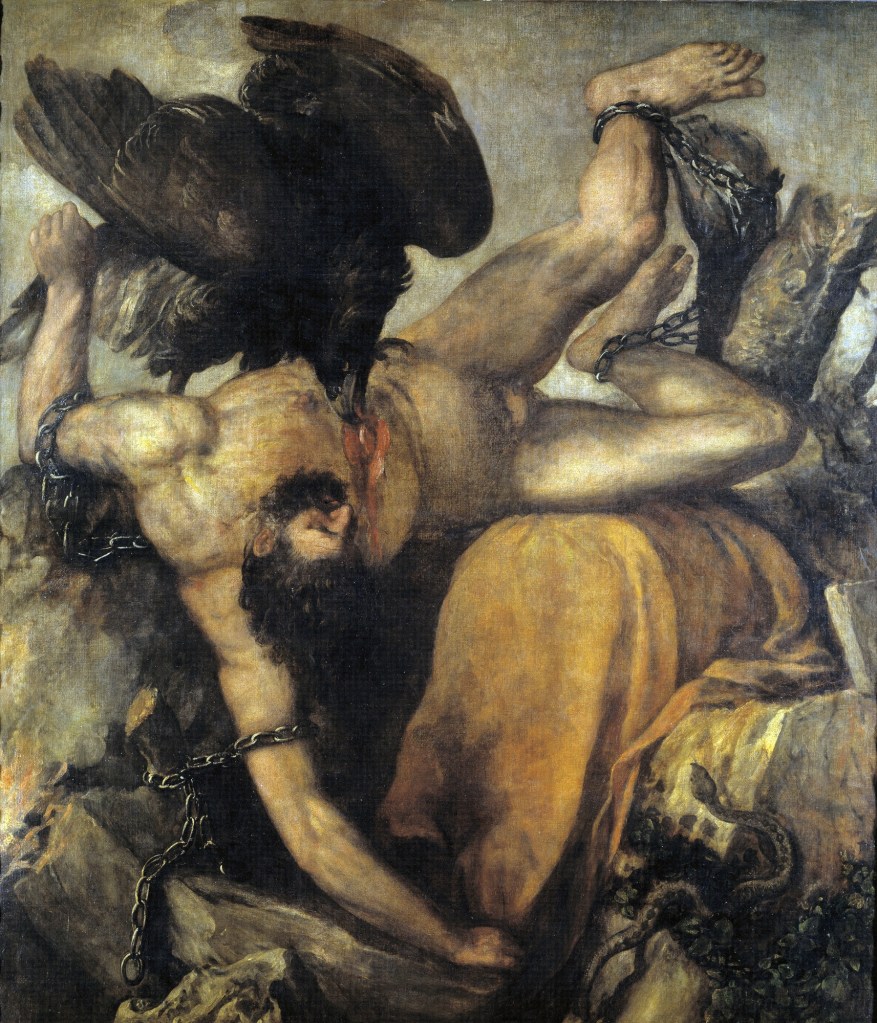
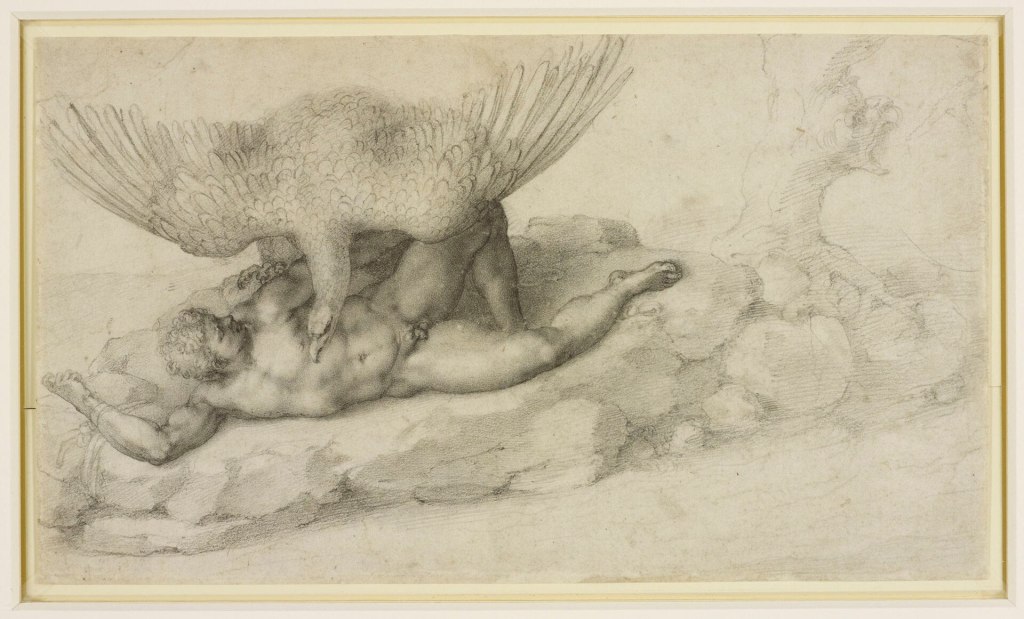
Hendrick Goltzius (1558-1617) was a Dutch engraver who only took up painting later in life (which, in the 16th and 17th centuries, meant your 30s and 40s). During this latter time, he travelled to Italy where he studied the works of Michelangelo and other Italian masters. (I pictured him lining up for three hours waiting to get into the Sistine Chapel). Some years later, he produced this work, which one can only assume was influenced by Michelangelo’s drawing and Titian’s painting of the same subject. In addition to the obvious classical themes, the hyper-muscular anatomy is, for me, often a stand out with these artists: full-on traps, lats, abs and pecs.
Moving on, it turns out that Tityus was a giant born to the “mortal princess” Elara and the god Zeus. I think mortal princess here means mistress, which makes Tityus Zeus’ illegitimate son. Easy. And we all know that Odysseus is the great-great-grandson of Zeus, which makes Tityus Odysseus’ great-great-uncle in a misbegotten sort of way. Right? Not quite, because it’s all literary fantasy really and the ancient Greeks didn’t see relationships as people do now with their endless genealogical databases.
Fittingly, it was Homer who first spoke (or maybe sang) about the plight of Tityus. As the story goes, Zeus’ wife Hera wasn’t happy about Zeus’ fling with Elara and sought revenge by commanding Tityus to seduce Leto (mother of Apollo and Artemis). Naughty Tityus obliged and was duly punished by his dad (Zeus — remember?), firstly slain by a thunderbolt (no surprise there re mode of death) and then sent to Tartarus where the really naughty (and already dead) boys go. In Tantarus, he was spread out over ground the size of five soccer pitches and committed to being attacked every day by a vulture (some witnesses say two) that fed on his liver, which — drum roll — grew back every night. Eternal misery. And some seriously dark genealogy.
So, what did Zeus or maybe Homer know about the liver that took medical science another two-and-a-half millennia to discover? Nothing at all. To the ancient Greeks, the liver was the seat of lust, passion, and physical desire. The growing back bit was just throwing salt into the wound.
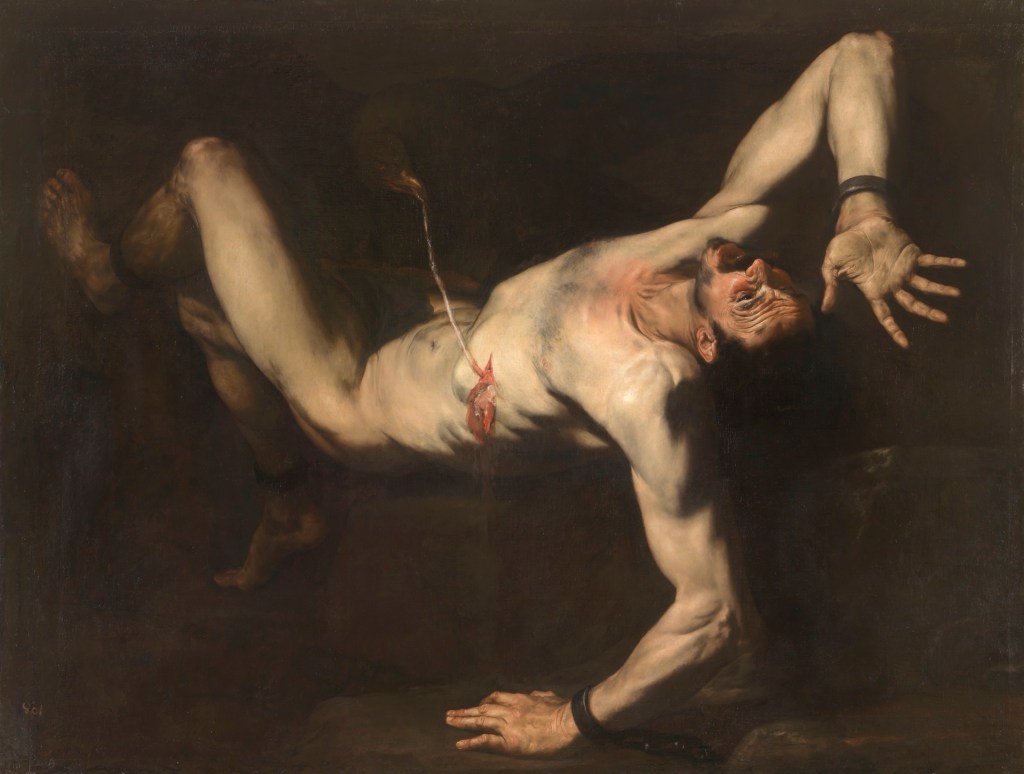
As to the accuracy of the anatomy depicted in Goltzius’ work, it looks like the vulture is going for the left lobe of the liver — my observation of relevance only really because Spanish painter Jusepe de Ribera later also painted the suffering of Tityus, but in his work the vulture seems to be going for Tityus’ spleen, i.e the other side of the abdomen. Odd.
So, can other organs or tissues grow back like this? The answer is, it depends. Skin? You bet. Bone marrow? Tick. The epithelial lining of hollow organs? Yep. Bone after fractures? Of course. What about the liver’s soul mate, the spleen? A little bit; in fact, surgeons also take advantage of this feature when they manage a ruptured spleen, implanting fragments of spleen shrapnel elsewhere in the abdomen. We need our spleen almost as much as we need our liver. Peripheral nerves? Slowly. Very slowly. Lungs, kidneys and pancreases can compensate for loss by enlarging, but nothing like a good liver can. Your heart or brain? Sorry.
But starfish do it really well — in some species, even from a single remaining limb. How someone first discovered this I have no idea, although it is easy to imagine the potential benefits of research on starfish regeneration to human health. Chop off a limb and study what happens. Getting it through Ethics would be another matter. And starfish in Greek mythology? Tipota!
Date visited: 12 April 2019
Images source: author – unless stated otherwise
Travel tip: Haarlem is a quick train trip from Amsterdam. While there you can also visit Teylers Museum of art and natural sciences (the oldest museum in the region). And, in April, tulips!
Map coordinates: 52.3766°N, 4.6337°E



I love it… as a stand alone story, and also because a lot of what you mentioned is incorporated in the game I am developing… starfish, Greek mythology, vultures, and I do have a vultures lair, so I think I’m gonna put this painting on the wall next to the big screen TV, where they are watching “real vultures of Silicon Valley”
LikeLike