Sun Yat-sen, Chiang Kai-shek, Mao Tse-tung, Chou En-lai — Chinese heroes I remember from my boyhood, following the news of the day. Who were the goodies and who the baddies was always hard to be sure. Sun Yat-sen I also remember from postage stamps. Some sort of revolutionary hero. But which revolution? Chinese modern history seemed to be a series of revolutions. And whose side was he on? And then years later I found out that he was actually a medical doctor, turned revolutionary.
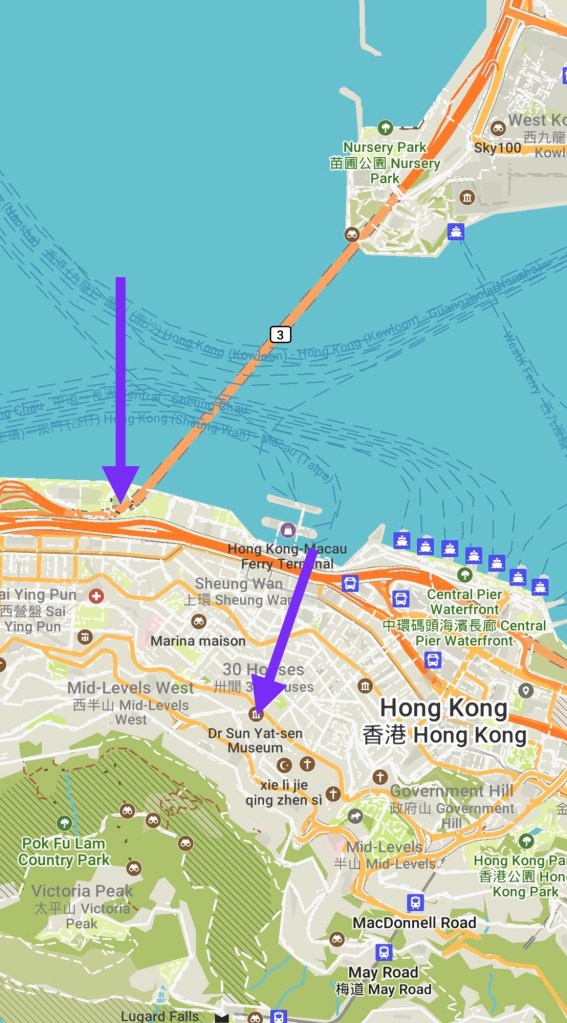
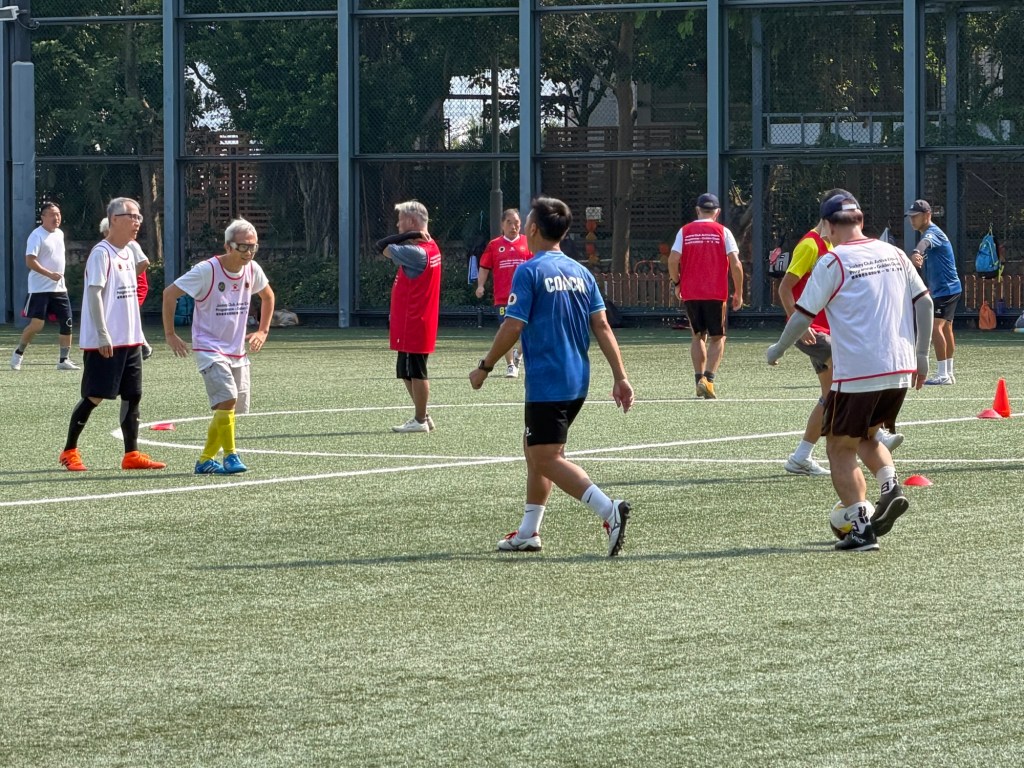
A pleasant early morning stroll from my hotel in Hong Kong’s Mid-Levels down through Sheung Wan neighbourhood — with its long strips of modern, brightly lit shops all selling the same traditional Chinese medicines — took me to a harbour-side promenade and on to my first destination for the morning: Sun Yat Sen Memorial Park. From there I was going to hopefully dip my pinkies in the harbour water then sea-to-summit hike to the top of Victoria Peak (known locally as ‘The Peak’). It’s wonderful the way Hong Kong’s districts create all sorts of exercise and relaxation areas out of the little plots of land between the high-rise buildings. In SYS’s park they all come together. There are fitness stations, a walking trail, a fitness corner for the elderly, various ‘sitting out’ areas and tai chi spots, a children’s play area, and even an ‘inclusive’ park for pets. But my favourite was a perfectly constructed soccer pitch, the favourite bit being the fact that, this morning, it was being used for a training session for seniors’ soccer — and I mean senior. Dozens of old blokes trotting about dribbling soccer balls, with two young marine corps coaches running around yelling instructions to whatever drills they were all supposed to be doing. Real beaut. I so wanted to join in.
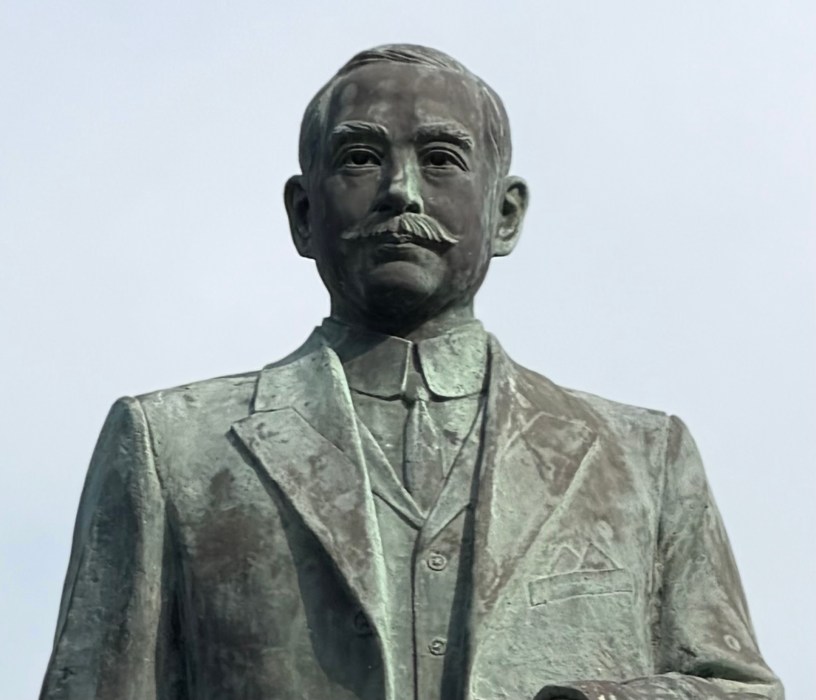
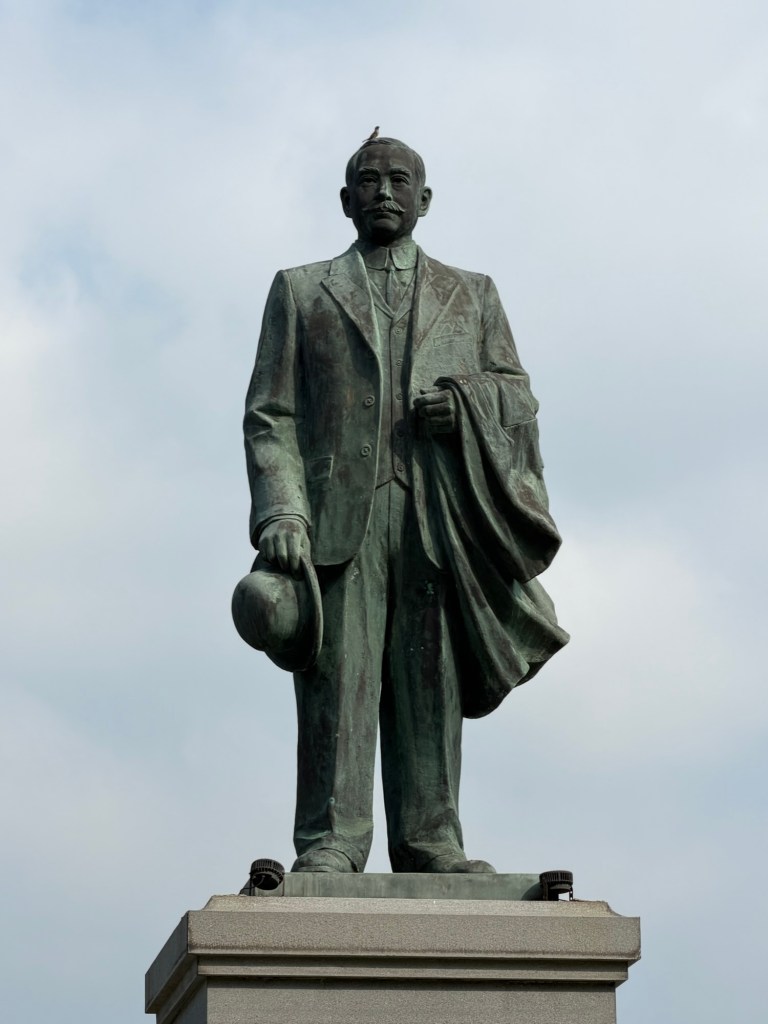
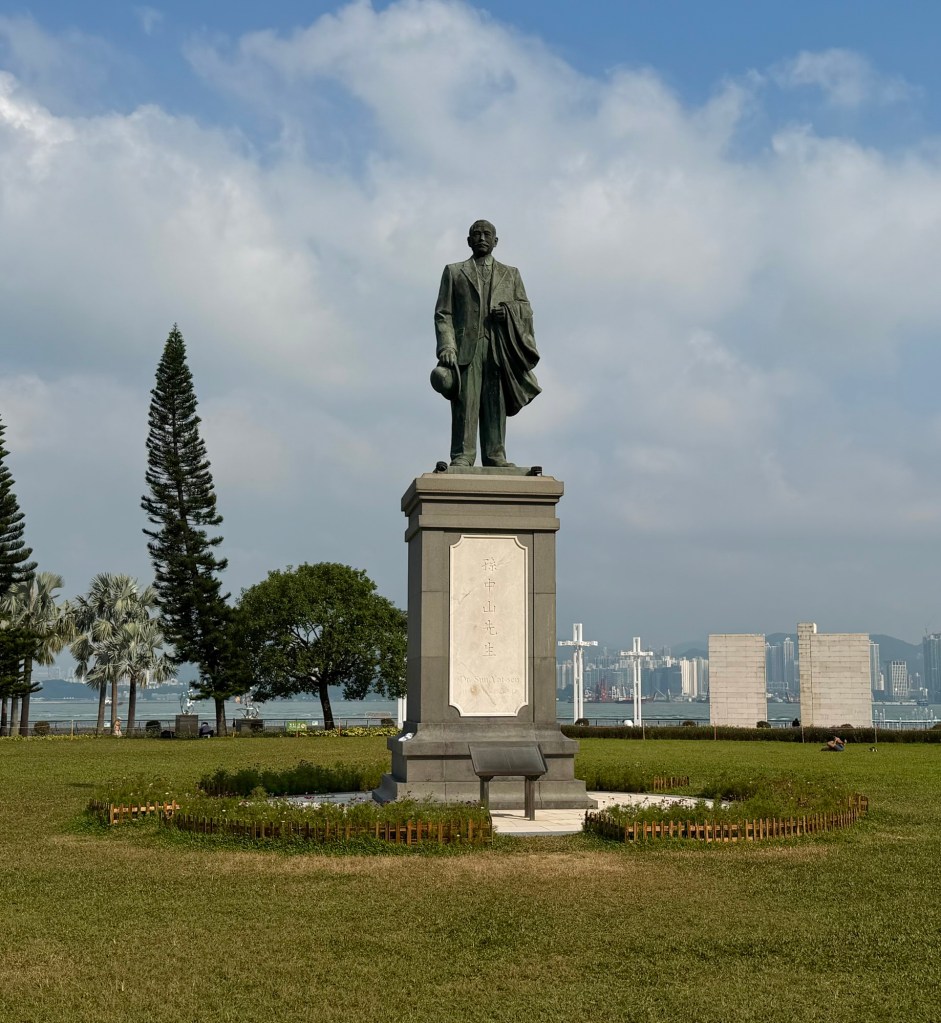
Dr Sun Yat-sen’s (1866-1925) larger-than-life-statue stands atop a column on a plinth in a somewhat plain, grassy patch of the park aside the harbour. Moustachioed, he looks like a diplomat more than a revolutionary — hat in hand, coat over arm, ready for conferencing. Little birds coming and going. Hong Kong high-rises on all horizons.
As part of my preparation for Hong Kong I had rewatched Bernardo Bertolucci’s film The Last Emperor (nine Oscars). An excellent refresher and scene-setter, the film tells the story of the life of Puyi, the last emperor of China, the early part of his life being contemporaneous with the revolutionary life of Sun Yat-sen (who doesn’t actually appear or even get a mention in the film). And with a fine supporting performance by Peter O’Toole … rather Lawrence of Arabia-esque, but so Peter O’Toole! Sun Yat-sen’s revolutionary life is, of course, important to the events depicted in the film. He was the leader of the movement that toppled the Qing dynasty and forced Puyi’s formal abdication in 1912. He then became the provisional president of the newly established Republic and the founder of the Kuomintang (Nationalist Party). And his early death in 1925 paved the way for Chiang Kai-shek’s rise and the escalating civil conflict that later shaped Puyi’s exile and alignment with Japan.
Next to the statue there is a helpful info board that nicely complemented my homework. It described Sun Yat-sen’s activities around the world: Japan, Singapore, United States, Europe and, of course, China, all leading to the eventual overthrow of the Qing dynasty. And then there’s a section on his elegant political philosophy, clearly drawing not only from his experiences of oppression in imperial China, but also from the systems and constitutions of established democracies. In spite of him ‘seeking alliances with the Soviet Union and the Chinese Communist Party’, I did go away wondering whether, had he lived longer, how the ‘father of republican China’ would have fared in the long run with the CCP.
But there’s little said in the info board about Dr Sun’s medical career, other than the fact that he studied at Hong Kong College of Medicine and that his mentors, medical and political, included the eminent physicians James Cantlie and He Qi — the former a British-Hong Konger and the latter Hong Kong-British. So what happened to his medical career? Did he ever have to write up a case? Put up a drip? Make a futile claim for overtime? Even just complete an internship? Well, it so happens that there was actually a bit to it — that is, before he ended up in the same league as other famous people whose medical careers were cut short by political ambition (think Che Guevara, Hastings Banda, Bashar al-Assad, Georges Clemenceau, Salvador Allende, Mahathir Mohamad, and so on — goodies and baddies among them all). More on that later.
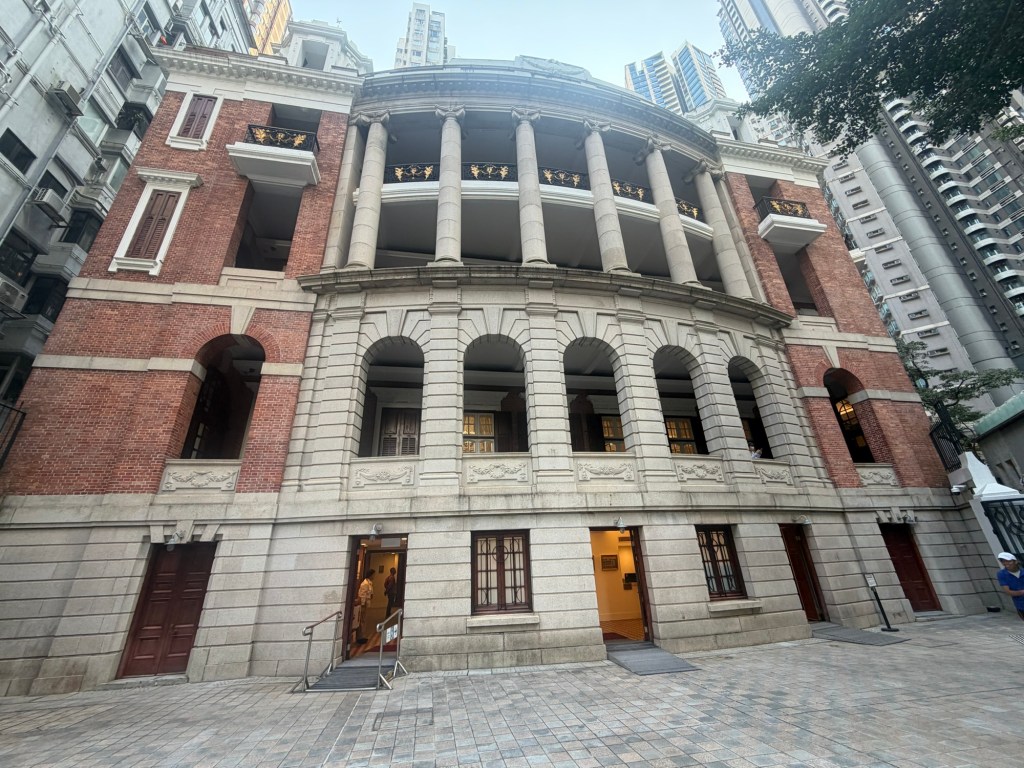
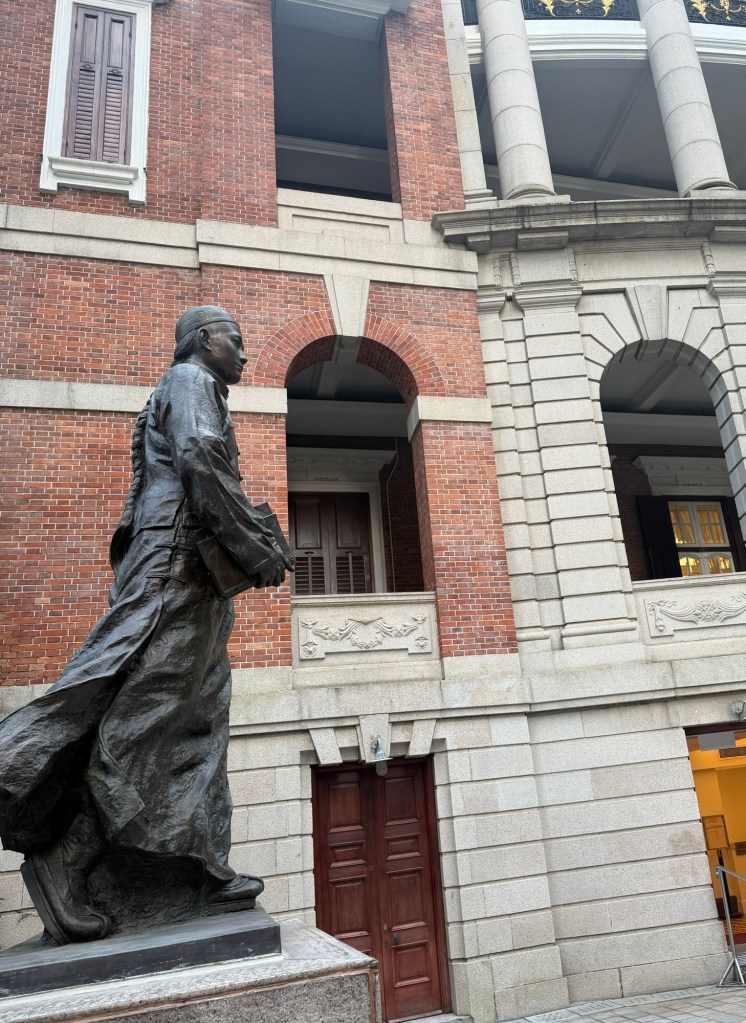
I moved on from the park, enjoying the steep hiking trails, but not quite truly bagging The Peak, as, like so many peaks in Hong Kong, it is topped by a high-security installation of some sort. Later that day, back down in Mid Levels, I dropped into the Dr Sun Yat-sen Museum, housed in an impressive old mansion in a nice part of town. A little disappointingly, it turned out to be more of a monument than a museum. A big building (donated by a benefactor) with not a whole lot on display — more staff than artefacts, I reckoned. But some nice family photos caught my attention. And in the forecourt of the museum there is a graceful sculpture of the great man in a flowing cassock-like garment — to my eurocentric eye, looking as much like a learned seminarian as a scholarly radical. Nearby, the Dr Sun Yat-sen Historical Trail is definitely worth a special trip and makes the museum visit more worthwhile. Most of the trail consists of ‘original sites’, i.e. with all the city’s development over the years, there’s nothing much left to see in the way of original structures (at the site of the College of Medicine, the commemorative sculpture was totally wrapped up in protective sheeting while roadworks happened nearby).
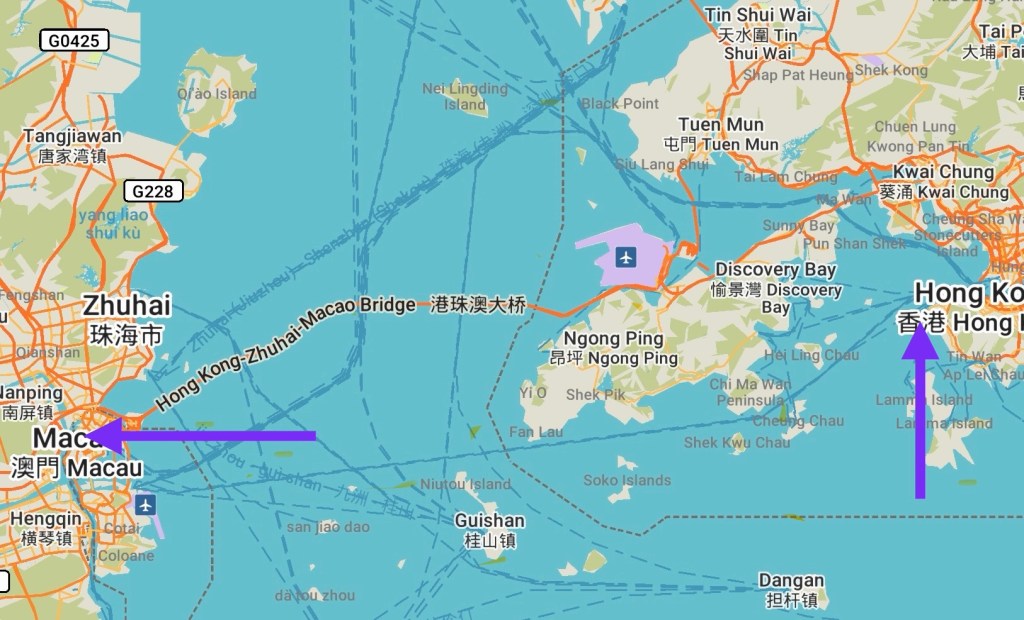
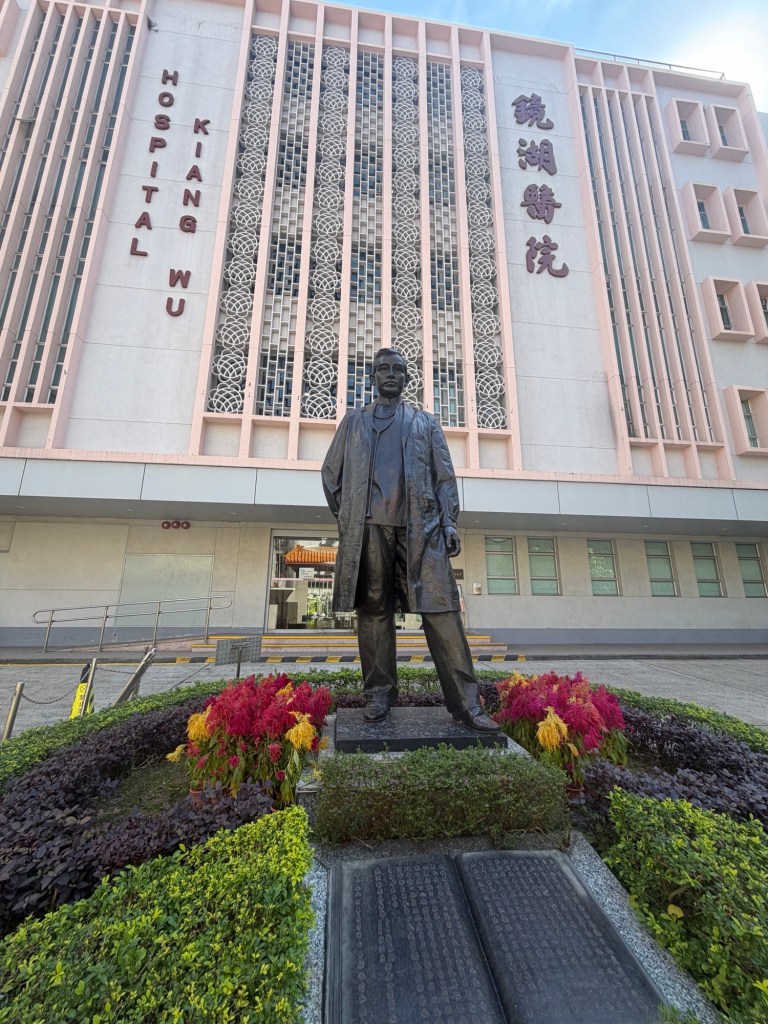
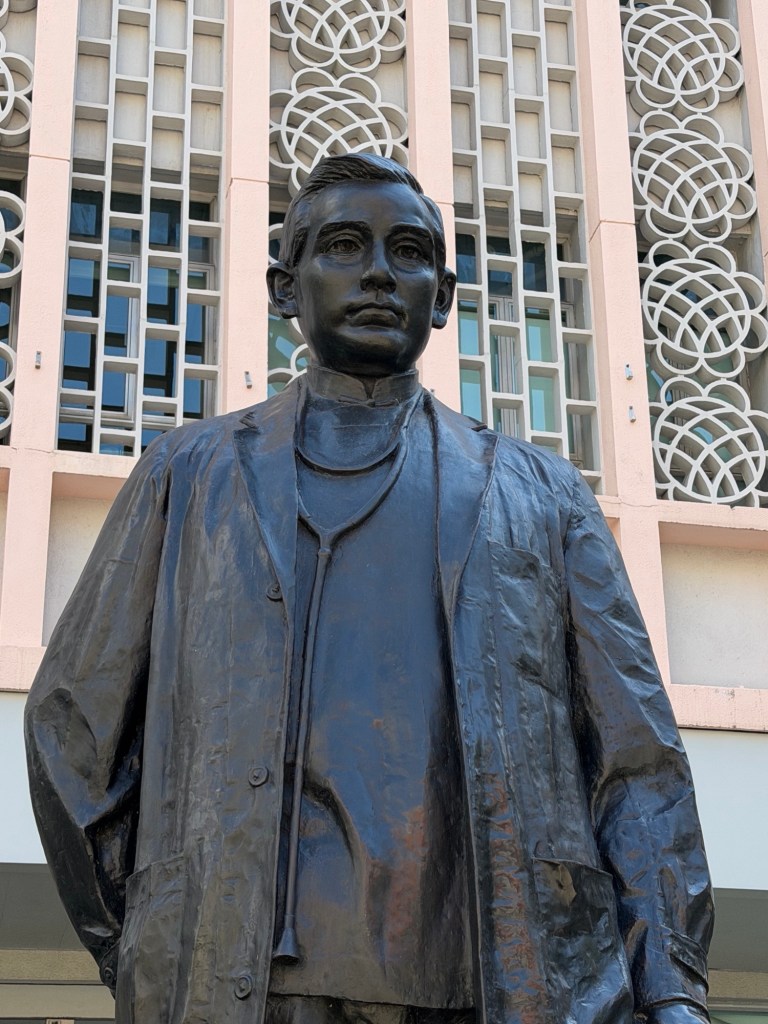
Before returning home to Australia, I popped over to Macau for a bit of a day-trip look-see. By virtue of Hong Kong having the world’s best public transit system, Macau (the other S.A.R. of China) is easily pop-overable, either by bus across the amazing Hong Kong-Macau tunnel bridge and/or by ferry across the Pearl/Zhujiang River estuary (a wild weather crossing on my day). Trying very hard to ignore the blight of casino architecture, I spent most of my time in Macau exploring the old town, with its interesting caged balconies overhanging narrow streets. Tucked away in the forecourt of Kiang Wu Hospital is another statue of the great man, this time dressed as a doctor with lab coat and stethoscope (I’m trying very hard not to make Barbie and Ken references here). This is more or less where he first practised medicine — although perhaps not so much an internship as 19th century off-the-deep-end ‘you’re-on-your-own, buddy’ type of medicine. After a year there, Portuguese colonial restrictions forced the young Dr Sun to move to Canton (now Guangzhou), where it seems his interest in medicine soon became overshadowed by politics. The rest is history.
There are Sun Yat-sen memorials all over the place: London, Guangzhou, Zhongshan, Shanghai, Nanjing (his tomb), Taipei, Penang, Singapore, Vancouver, New York City, Los Angeles, Seattle, Toronto, and probably many other places, too. And there’s one in the Chinatown of my birth city, Melbourne.
Date visited: October/November 2026
Images source: authorーunless stated otherwise
Travel tip: Add value to your time in a foreign place by indulging in the life and legacy of one of its favourite sons or daughters: Paris — Napoleon; Greece — Odysseus; Rome — Michelangelo; England — Elizabeth I; France — Joan of Arc; Netherlands — Rembrandt; India — Gandhi; Australia — Matthew Flinders. And many more!
Map coordinates — SYS Memorial Park: 22.2897°N, 114.1456°E; SYS Museum: 22.2821°N, 114.1508°E; SYS statue, Macau: 22.1996°N, 113.5426°E;