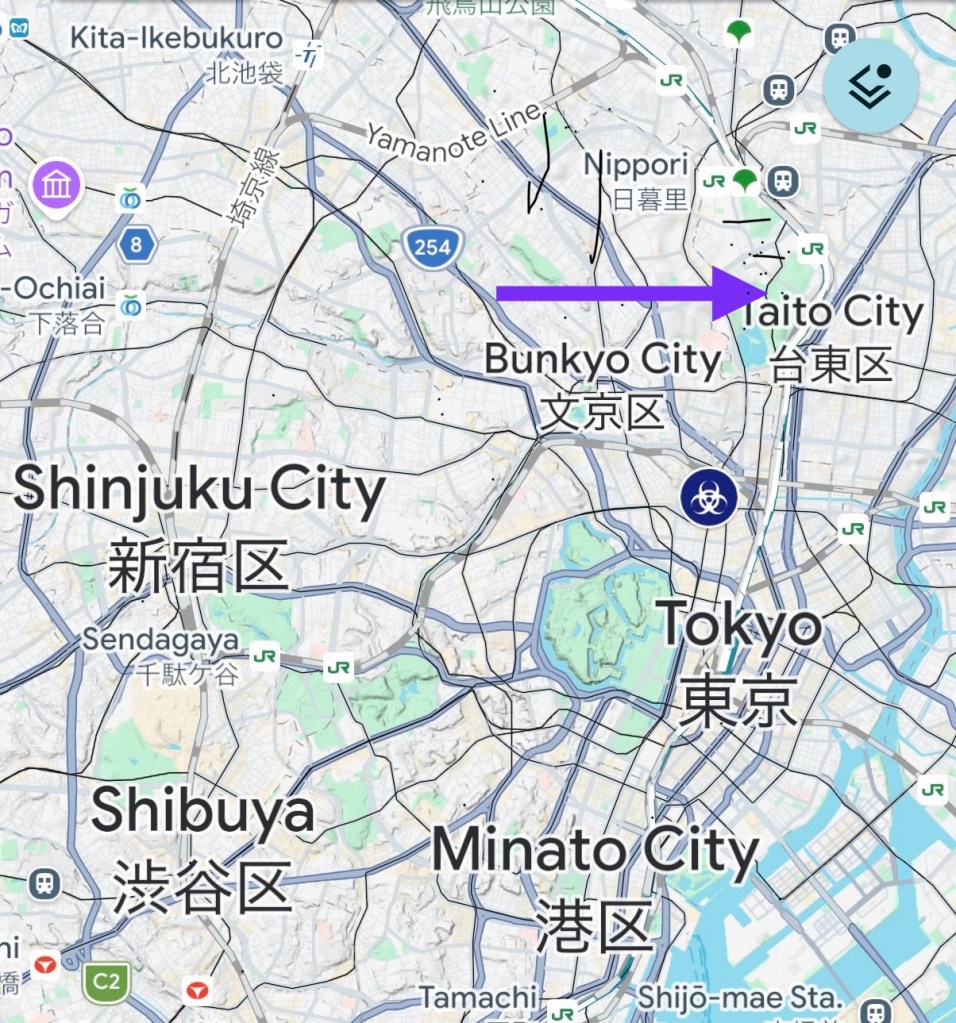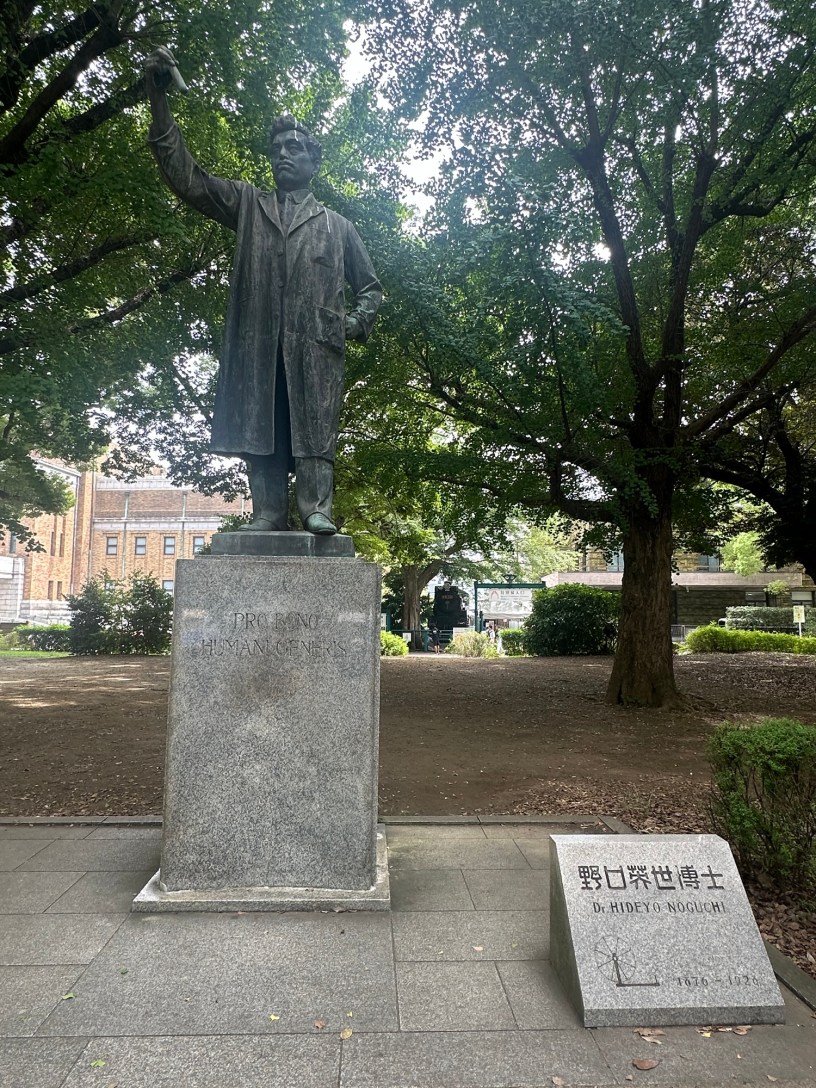
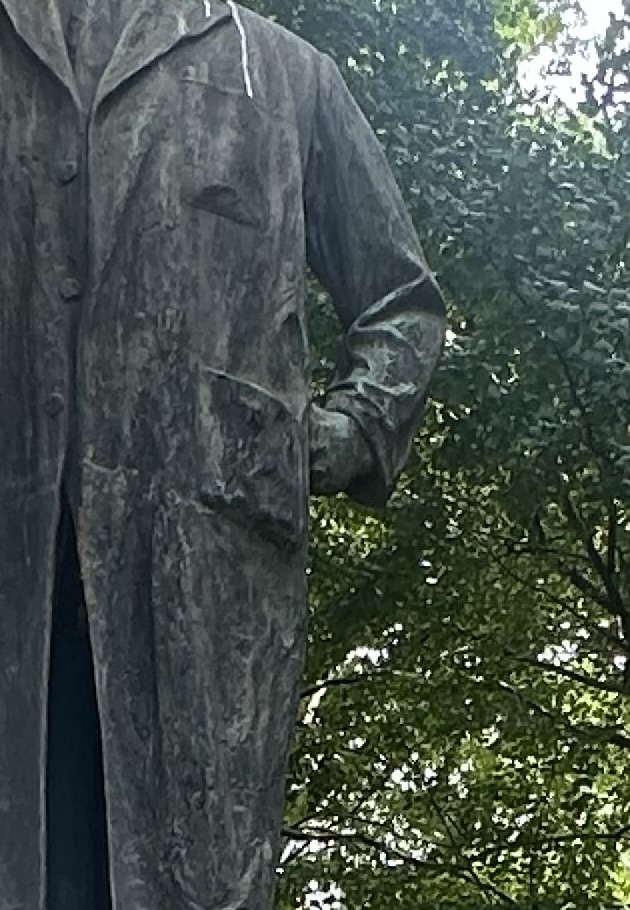
I am a little embarrassed to say that I had never heard of Hideyo Noguchi when I wandered up to this statue outside Tokyo’s National Museum of Nature and Science. Maybe it’s because there isn’t an eponym in his honour ー no Noguchi disease or Noguchi’s sign. From a distance I thought the subject was a conductor: stately pose, pronounced coif, holding what looked like a baton ー turned out to be a test tube. Closer up, he’s clearly wearing a lab coat, left hand resting intently on his hip. And, appropriate to the setting, a dash of brow-to-shoulder bird poop.
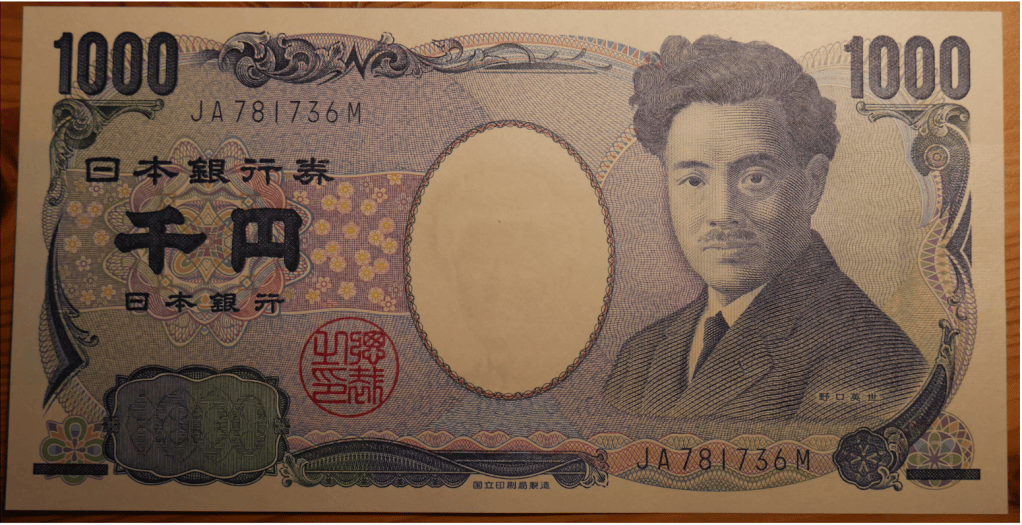
Noguchi’s career was a distinguished one, but with a tragic ending. In Japan, he is their Pasteur, Fleming, Florey or Salk. His portrait is on the 1000 Yen note, and in his home town of Inawashiro there is substantial museum honouring his life and work, including his preserved childhood home. Next door, a museum devoted to infectious diseases – a clue to my embarrassment.
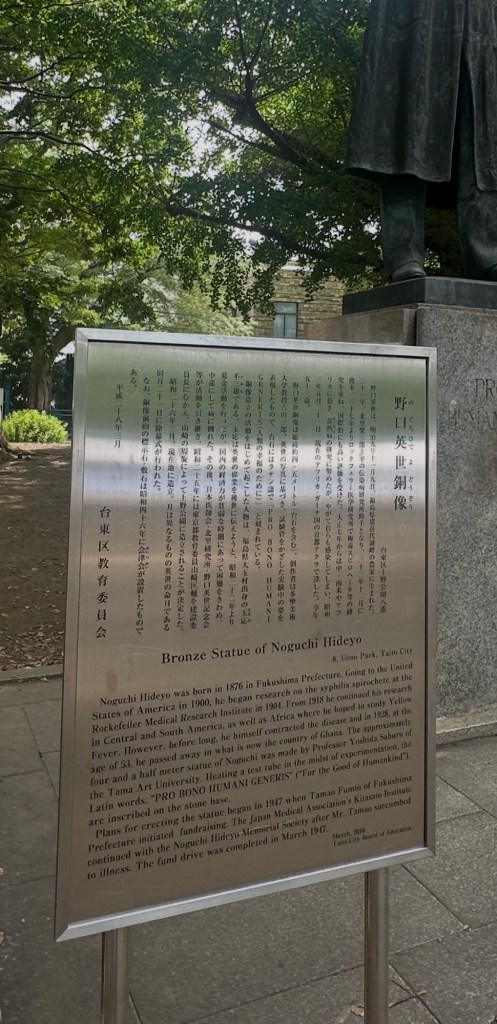
Noguchi (1876-1928) was a key figure behind several important discoveries in the world of infectious diseases. In 1899, having graduated from Tokyo Medical College two years previously, he was introduced to Simon Flexner, American physician-scientist (think Shigella flexneri), who had stopped in Tokyo on the way to the Philippines. Another two years on, assisted by the recommendation of Flexner, Noguchi was off to the Rockefeller Institute in Philadelphia. After early research on the physiological effects of snake venom, Noguchi switched to infectious diseases and over the next two decades published dozens of papers on diseases as diverse as syphilis, tuberculosis, trachoma, poliomyelitis, rabies, bartonellosis, yellow fever and Rocky Mountain spotted fever. Unsurprisingly, by his own account he was a workaholic. Among his most celebrated discoveries were Treponema pallidum as the cause of neurosyphilis, and Bartonella bacilliformis as the cause of both Oroya fever and verruga peruviana. He was also noted for his work on the serology of syphilis. His later work on other diseases was less auspicious and, at times, much criticised, thought in part because of personality changes related to Noguchi himself contracting syphilis. One wonders whether this was occupationally acquired; if so, it would have to have been through accidental inoculation during blood collection or post-mortem examination. And if so, it would add Noguchi to the list of famous medical researchers who have suffered/died from the diseases which they studied. But wait, there’s more.
In 1927, Noguchi travelled to Accra (then in Gold Coast, now Ghana) as part of a yellow fever research expedition organised by the Rockefeller Foundation. The following year, he contracted yellow fever and died. Just like that. Whether his infection was acquired in the lab or out in the tropical open is not known. Interestingly, his body was returned to the United States rather than Japan, buried in Woodlawn Cemetery in the Bronx, New York City ー thereafter with the tragic legacy of being added to the “list” a second time.
And back to our statue. I wonder if there’s something in the way Noguchi is depicted concealing the fingers of his left hand. As a toddler, he fell into a fire and sustained burns that left him with a disfigured hand with fused fingers. Despite ungoing reconstructive surgery when a teenager, he was considered unsuitable for a career in surgery. The rest, as they say, is history.
Date visited: 18 September 2025
Images source: author – unless stated otherwise
Travel tip: Ueno Park is home to several museums, of which the National Museum of Nature and Science is particularly worth visiting. Then you can take a Shinkansen (plus a few connections) to Inawashiro!
Map coordinates: 35.7163°N, 139.7757°E