
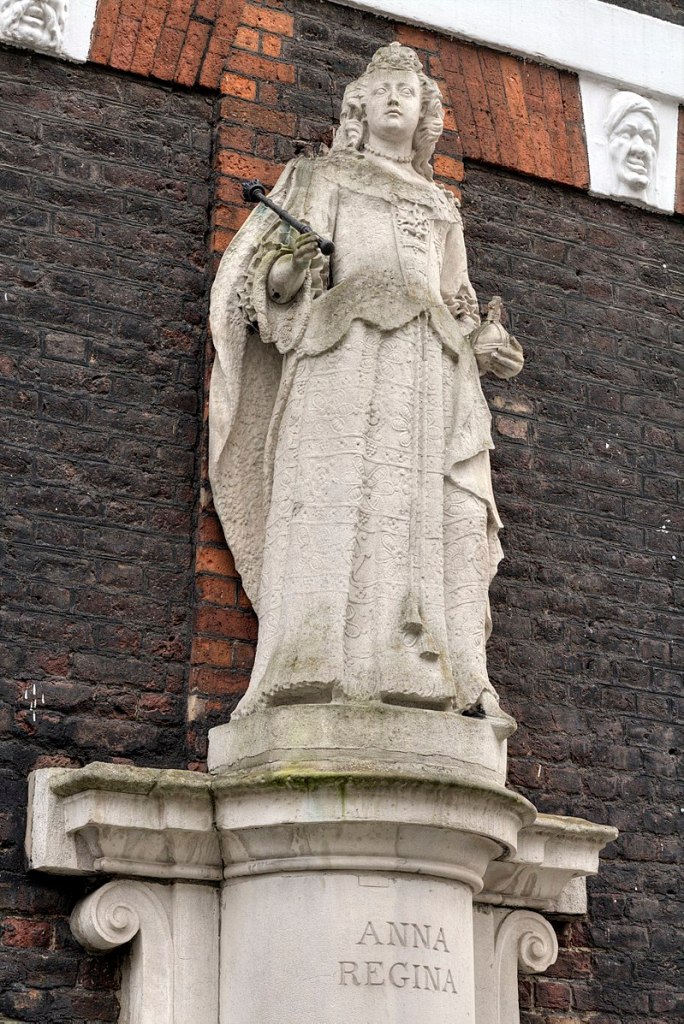
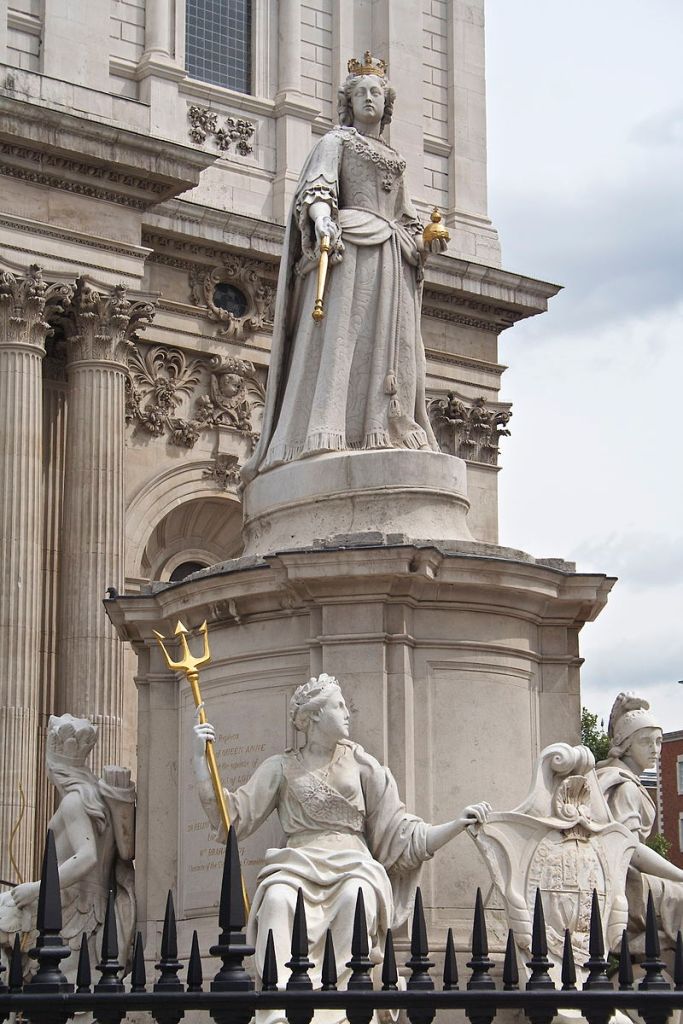
There are two prominent statues of Queen Anne (1665-1714) in London: one outside St Paul’s Cathedral and the other in Queen Anne’s Gate, Westminster. In each, she is bearing the sceptre and orb, symbols of the power of God and the Monarchy. But neither statue reveals anything of Anne’s interesting obstetric and medical history – about which there has been much speculation – nor of her purported, ex-officio, healing power. The obstetric history was mostly notable for 17 recorded pregnancies, from which just one child – William Duke of Gloucester – survived beyond infancy, but died soon after his 11th birthday. Speculation about her medical history has included diagnoses such as smallpox (as a child – likely), gout, arthritis, lupus, diabetes, listeriosis, syphilis (of course) and pelvic inflammatory disease. But it is perhaps her healing power as the reigning British monarch that has attracted most scholarly interest over the three centuries since her death. Popular Anne was the last monarch to practise the “Royal Touch” for scrofula – also known as the King’s Evil. Scrofula was the Latin term for a swelling of the glands of the neck, derived from scrofa, a breeding sow (and if you want to really immerse yourself in the appearance and habits of a breeding sow, watch the delightful 2020 film “Gunda”).
Medically, scrofula refers to the condition and appearance of people (typically children and young adults) who are suffering the disfiguring effects of tuberculosis of the lymph glands of the neck (tuberculous lymphadenitis) – and when you get to know a breeding sow you will appreciate that it is the glands that coalesce just below the jaw line that are particularly affected. The Royal Touch was a large and carefully staged ceremony, in which patients who had exhausted all natural remedies could have their swellings healed (supposedly) by the divinely anointed hands of the English monarch of the day. The French were in on the game, too (Mal de Roi in French), with both dynasties having been gathering expertise as royal charlatans since the 13th and 14th centuries. The thousands of loyal subjects that Anne touched included a young Samuel Johnson – apparently without benefit. After Anne’s death, the new royal boss, Hanoverian monarch George I, discontinued the miraculous healing ceremony, possibly because of its Catholic and Stuart associations. So, rather than an orb and a sceptre, perhaps a modern Annie should be bearing a prescription pad and dispenser of antiseptic hand gel. Other statues of Anne (some more representational than realistic) can be found at Guildhall, the Public Record Office and Hotel Russell.
Date visited: September 2019
Image sources: Wikimedia Commons

 History of Medicine Traveller